
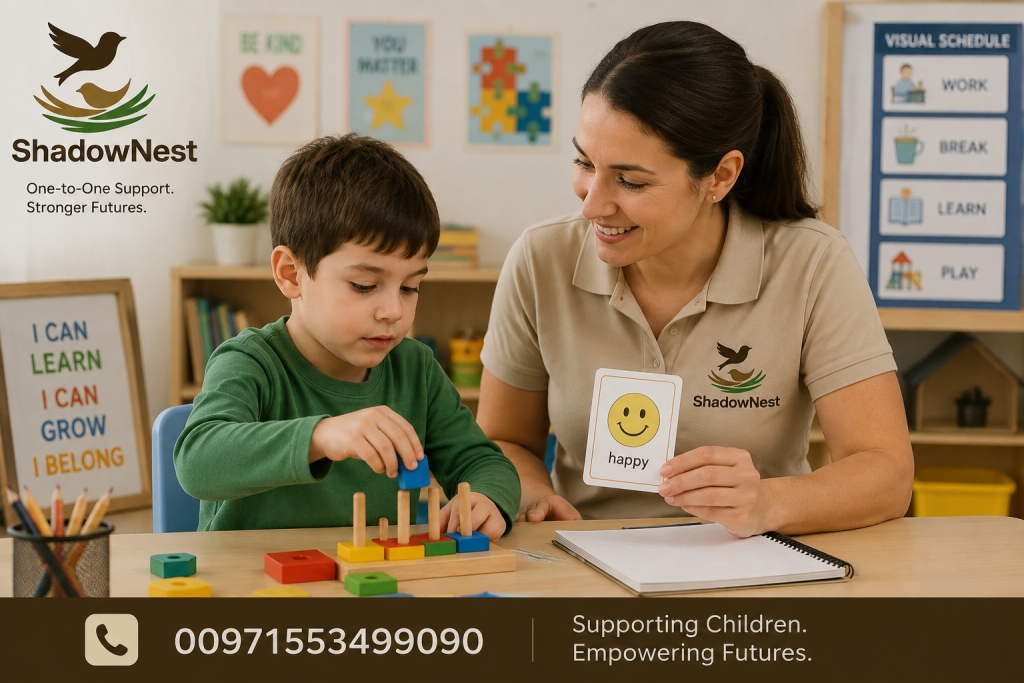
Autism Shadow Teacher providing one-to-one classroom support to a child with autism in an inclusive school in Dubai.

Autism Shadow Teacher: 15 Essential Benefits Every Parent Should Know


Autism Shadow Teacher: A Complete Guide to One-to-One Classroom Support for Children with Autism


Table of Contents

What Is an Autism Shadow Teacher?

An Autism Shadow Teacher is a trained educational support professional who works one-to-one with a child diagnosed with Autism Spectrum Disorder (ASD) in a school environment. Their primary role is to help the child participate successfully in classroom activities while gradually developing the independence needed to thrive without constant support.

Unlike a classroom teacher, an Autism Shadow Teacher focuses on the individual needs of one student. They work closely with classroom teachers, therapists, school staff, and parents to ensure that educational goals, behavioural strategies, and communication techniques remain consistent throughout the child’s daily routine.

The ultimate objective is not to make the child dependent on continuous assistance. Instead, an Autism Shadow Teacher provides structured guidance that allows the child to gain confidence, improve social participation, strengthen communication skills, and become increasingly independent.

As inclusive education continues to expand across Dubai and the UAE, Autism Shadow Teachers have become an essential part of many schools that welcome children with diverse learning needs into mainstream classrooms.


Why Do Children with Autism Need Individualized Classroom Support?

Every child with autism is unique.

Some children communicate fluently but struggle with social interaction. Others may have excellent academic abilities yet experience difficulty coping with changes in routine or managing sensory stimulation inside the classroom.

For many children, the traditional classroom presents multiple challenges simultaneously.

These may include:

  • Following verbal instructions.
  • Maintaining attention.
  • Participating in group activities.
  • Managing sensory overload.
  • Expressing emotions appropriately.
  • Understanding classroom expectations.
  • Building friendships.
  • Completing academic tasks independently.

Without appropriate support, these challenges can reduce confidence and negatively affect learning outcomes.

An Autism Shadow Teacher bridges the gap between the child’s abilities and the classroom environment by providing individualized guidance exactly when it is needed.


The Role of an Autism Shadow Teacher

Many parents mistakenly believe that a shadow teacher simply sits next to a child throughout the school day.

In reality, the role is much broader and requires professional knowledge, patience, flexibility, and excellent communication skills.

An Autism Shadow Teacher may assist with:

Academic Support

Academic assistance does not mean completing work for the child.

Instead, the shadow teacher helps the student:

  • Understand classroom instructions.
  • Organize learning materials.
  • Stay focused during lessons.
  • Break complex tasks into smaller steps.
  • Complete assignments independently.
  • Build effective learning strategies.

The goal is always to encourage independent learning rather than dependence.


Communication Support

Communication difficulties are common among many children with autism.

Some children have limited verbal language, while others experience challenges understanding social communication despite having strong vocabulary skills.

An Autism Shadow Teacher helps children:

  • Express their needs appropriately.
  • Ask questions confidently.
  • Participate in classroom discussions.
  • Improve conversational skills.
  • Understand verbal and non-verbal communication.

By providing support during natural classroom interactions, children have daily opportunities to practice communication in meaningful situations.


Social Skills Development

Friendships can be one of the most challenging aspects of school for children with autism.

Some children prefer solitary activities, while others want to interact but are unsure how to initiate conversations or interpret social cues.

An Autism Shadow Teacher helps by encouraging:

  • Turn-taking.
  • Sharing.
  • Cooperative play.
  • Group participation.
  • Conflict resolution.
  • Appropriate classroom behaviour.

Rather than creating artificial social situations, these skills are developed naturally throughout the school day.


Behavioural Support

Behaviour is often a form of communication.

Children may display challenging behaviours because they feel overwhelmed, anxious, confused, or unable to express their needs effectively.

Instead of reacting with punishment, an Autism Shadow Teacher seeks to understand the reason behind the behaviour.

Support may include:

  • Identifying behavioural triggers.
  • Preventing escalation.
  • Teaching alternative behaviours.
  • Reinforcing positive actions.
  • Encouraging emotional regulation.
  • Building self-control.

This proactive approach creates a more positive learning environment for both the child and the classroom.


Emotional Support

School can be emotionally demanding for children with autism.

Unexpected schedule changes, sensory stimulation, social misunderstandings, or academic pressure may lead to anxiety and frustration.

An Autism Shadow Teacher provides reassurance while helping the child develop emotional resilience.

Support strategies may include:

  • Visual schedules.
  • Calm communication.
  • Positive reinforcement.
  • Relaxation techniques.
  • Structured routines.
  • Transition planning.

Over time, children learn to manage these situations more independently.


Benefits of an Autism Shadow Teacher

When provided appropriately, individualized classroom support offers benefits that extend far beyond academic achievement.

Improved Independence

One of the greatest misconceptions about shadow teaching is that children become dependent on support.

Professional Autism Shadow Teachers do exactly the opposite.

They continuously evaluate when assistance can be reduced, allowing children to solve problems independently and gain confidence in their own abilities.

Every successful independent action represents progress toward long-term educational success.


Better Academic Performance

Children who understand classroom expectations are better able to participate in lessons.

With individualized guidance, students often experience improvements in:

  • Reading comprehension.
  • Writing skills.
  • Mathematics.
  • Classroom participation.
  • Homework completion.
  • Organization.

These improvements also contribute to greater confidence and motivation.


Social Development and Peer Relationships

One of the most significant benefits of an Autism Shadow Teacher is helping children build meaningful relationships with their classmates. School is where children develop communication skills, teamwork, empathy, and confidence. However, many children with autism find social situations confusing or overwhelming.

An Autism Shadow Teacher provides gentle guidance during everyday interactions rather than creating artificial social activities. The child learns by participating naturally in classroom routines, group projects, and playground activities.

A shadow teacher may encourage the child to:

  • Initiate conversations with classmates.
  • Respond appropriately during discussions.
  • Understand personal space.
  • Take turns during games.
  • Share materials with peers.
  • Participate in group learning activities.
  • Develop problem-solving skills during social conflicts.

As confidence grows, many children begin forming friendships independently and require less support during social interactions.


Supporting Sensory Regulation

Many children with autism experience sensory processing differences that affect their ability to learn in a busy classroom.

Common sensory challenges include sensitivity to:

  • Loud sounds.
  • Bright lights.
  • Crowded environments.
  • Unexpected touch.
  • Strong smells.
  • Certain textures.

Some children may also seek additional sensory input by moving frequently, touching objects, or fidgeting throughout the day.

An experienced Autism Shadow Teacher understands these sensory needs and works with the classroom teacher to minimize unnecessary stress.

Strategies may include:

Creating Predictable Routines

Children with autism often feel more secure when they know what will happen next.

A shadow teacher may use:

  • Visual schedules.
  • Daily planners.
  • Picture cards.
  • Timers.
  • Countdown reminders before transitions.

Predictability reduces anxiety and helps children prepare for changes.

Providing Sensory Breaks

Rather than waiting until a child becomes overwhelmed, a shadow teacher schedules short sensory breaks throughout the school day.

These may include:

  • Walking.
  • Stretching.
  • Deep breathing.
  • Quiet reading.
  • Movement activities.
  • Access to a calm corner.

These brief breaks often improve attention and emotional regulation.

Recognizing Early Signs of Overload

Professional Autism Shadow Teachers learn to recognize subtle signs that a child is becoming overwhelmed.

These signs may include:

  • Increased repetitive behaviours.
  • Covering ears.
  • Avoiding eye contact.
  • Restlessness.
  • Changes in breathing.
  • Withdrawal from activities.

Early intervention helps prevent emotional meltdowns and allows the child to regain control before stress becomes overwhelming.


Encouraging Independence Instead of Dependence

One of the biggest misconceptions about an Autism Shadow Teacher is that children become dependent on constant support.

A qualified professional works toward exactly the opposite goal.

Every support strategy is designed to become less necessary over time.

This process is often called fading support.

For example:

Instead of immediately giving the correct answer, the shadow teacher may first provide a simple verbal reminder.

Later, they may use only a visual cue.

Eventually, the child completes the task independently without assistance.

This gradual reduction of support helps children develop:

  • Confidence.
  • Self-management.
  • Decision-making.
  • Problem-solving.
  • Responsibility.
  • Independent learning habits.

The ultimate success of an Autism Shadow Teacher is measured by how little support the child eventually needs.


Collaboration with Teachers

Successful classroom support depends on teamwork.

An Autism Shadow Teacher works closely with the classroom teacher to ensure that support complements—not replaces—the school’s educational program.

This collaboration may include:

  • Reviewing daily lesson objectives.
  • Discussing classroom expectations.
  • Monitoring academic progress.
  • Sharing behavioural observations.
  • Adjusting support strategies.
  • Preparing for upcoming classroom activities.

Regular communication ensures that everyone is working toward the same educational goals.


Working with Parents

Parents know their child better than anyone else.

For this reason, regular communication between families and the Autism Shadow Teacher is essential.

Parents can provide valuable information about:

  • Home routines.
  • Communication preferences.
  • Behavioural triggers.
  • Reinforcement strategies.
  • Medical considerations.
  • Therapy goals.

Likewise, the shadow teacher can share observations about classroom participation, social development, and academic progress.

When parents, teachers, therapists, and the Autism Shadow Teacher work together, children receive consistent support across different environments.


Supporting Inclusive Education

Inclusive education allows children with autism to learn alongside their typically developing peers whenever appropriate.

However, inclusion is about much more than simply placing children in the same classroom.

True inclusion means ensuring every child can participate meaningfully in learning activities.

An Autism Shadow Teacher helps make inclusion successful by:

  • Encouraging classroom participation.
  • Promoting peer interaction.
  • Reducing barriers to learning.
  • Supporting emotional well-being.
  • Building independence.
  • Helping children achieve educational goals.

Through individualized support, children become active members of the classroom community rather than passive observers.


Skills Every Autism Shadow Teacher Should Have

Not every teaching assistant is prepared to work effectively with children on the autism spectrum.

An excellent Autism Shadow Teacher should demonstrate:

Strong Communication Skills

The ability to communicate clearly with children, teachers, therapists, and parents.

Patience and Flexibility

Every child learns differently, and successful strategies often require adjustment.

Understanding of Autism

Knowledge of autism characteristics helps teachers provide appropriate support without making assumptions.

Behaviour Support Skills

Professional understanding of positive behaviour support is essential for preventing and managing challenging situations.

Observation Skills

Careful observation allows shadow teachers to identify patterns, strengths, and areas requiring additional support.

Commitment to Independence

The most effective Autism Shadow Teachers constantly look for opportunities to reduce support while increasing the child’s confidence and self-reliance.


Challenges Faced by an Autism Shadow Teacher

Working as an Autism Shadow Teacher is both rewarding and demanding. Every child with Autism Spectrum Disorder (ASD) has unique strengths, learning styles, communication abilities, and support needs. For this reason, no two school days are exactly the same.

A professional Autism Shadow Teacher must continuously adapt strategies while maintaining consistency and promoting the child’s independence.

Some of the most common challenges include:

Managing Unexpected Changes

Children with autism often thrive on routine. Unexpected events such as substitute teachers, timetable changes, school assemblies, or classroom relocations may increase anxiety and affect participation.

An experienced Autism Shadow Teacher prepares the child in advance whenever possible by using visual schedules, social stories, and transition strategies.


Balancing Support and Independence

Providing too much support may unintentionally reduce opportunities for independent learning.

Providing too little support may lead to frustration and academic difficulties.

One of the most important responsibilities of an Autism Shadow Teacher is finding the right balance between assistance and independence.

This balance changes as the child’s skills develop.


Supporting Social Inclusion

Helping a child become part of the classroom community requires patience and planning.

The goal is not simply to keep the child calm but to encourage genuine participation.

This includes helping the child:

  • Join conversations naturally.
  • Participate in classroom discussions.
  • Work with classmates.
  • Build friendships.
  • Understand social expectations.

True inclusion means helping children become active members of the classroom rather than observers.


How to Choose the Right Autism Shadow Teacher

Selecting the right Autism Shadow Teacher is one of the most important decisions parents can make.

The right professional should have experience, compassion, and a commitment to helping children become increasingly independent.

When choosing an Autism Shadow Teacher, parents should consider the following qualities.

Professional Knowledge

A qualified Autism Shadow Teacher should understand:

  • Autism Spectrum Disorder
  • Child development
  • Inclusive education
  • Positive behaviour support
  • Classroom management
  • Communication strategies

Formal training and practical experience both contribute to effective support.


Excellent Communication Skills

A shadow teacher communicates daily with:

  • Parents
  • Classroom teachers
  • School administrators
  • Speech therapists
  • Occupational therapists
  • Behaviour specialists

Clear communication ensures everyone works toward the same educational goals.


Patience and Emotional Intelligence

Children with autism may require additional time to process information, adapt to change, or express themselves.

A successful Autism Shadow Teacher remains calm, supportive, and encouraging even during challenging situations.


Commitment to Lifelong Learning

Educational practices continue to evolve.

The best Autism Shadow Teachers regularly update their knowledge through professional development, workshops, research, and collaboration with other specialists.


Common Mistakes Parents Should Avoid

Parents naturally want to provide the best possible support for their child. However, certain misunderstandings may reduce the effectiveness of classroom assistance.

Expecting the Shadow Teacher to Replace Therapy

A shadow teacher is an educational support professional, not a replacement for speech therapy, occupational therapy, behavioural therapy, or psychological services.

Each professional plays a different role in the child’s development.


Measuring Success Too Quickly

Progress is rarely immediate.

Children develop at different rates, and meaningful improvement often occurs gradually through consistent support.

Parents should celebrate small achievements, as these often lead to significant long-term progress.


Focusing Only on Academic Performance

Academic success is important, but education involves much more than grades.

An Autism Shadow Teacher also helps children develop:

  • Confidence
  • Communication
  • Independence
  • Emotional regulation
  • Social relationships
  • Problem-solving skills

These life skills often have an even greater long-term impact.


Frequently Asked Questions

What is an Autism Shadow Teacher?

An Autism Shadow Teacher is a trained educational support professional who provides one-to-one assistance to children with autism in school, helping them participate successfully in academic, social, and classroom activities while promoting independence.


Who needs an Autism Shadow Teacher?

Children with Autism Spectrum Disorder who experience challenges with communication, behaviour, attention, social interaction, sensory processing, or classroom participation may benefit from individualized classroom support.


Does every child with autism need an Autism Shadow Teacher?

No. Every child is different. The need for an Autism Shadow Teacher depends on the child’s strengths, challenges, educational goals, and level of independence rather than the diagnosis alone.


Can an Autism Shadow Teacher help in mainstream schools?

Yes. Autism Shadow Teachers play an important role in inclusive education by helping children participate successfully in mainstream classrooms alongside their peers.


What qualifications should an Autism Shadow Teacher have?

Parents should look for professionals with experience in autism support, inclusive education, child development, positive behaviour support, and effective communication with families and school staff.


Will my child become dependent on a shadow teacher?

A professional Autism Shadow Teacher continuously works toward reducing support as the child develops greater confidence, independence, and self-management skills.

The long-term goal is always independence.


Conclusion

An Autism Shadow Teacher provides far more than classroom assistance. They help children with autism build confidence, develop communication skills, improve social interactions, manage emotions, and participate successfully in inclusive educational settings.

Every child has unique strengths and challenges. When individualized support is matched to a child’s specific needs, the results often extend beyond academic achievement. Children become more independent, develop stronger relationships with peers, and gain the confidence needed to participate actively in school life.

Early support, collaboration between families and educators, and evidence-based teaching strategies all contribute to positive educational outcomes. As inclusive education continues to grow in Dubai and the UAE, Autism Shadow Teachers remain an essential part of helping children reach their full potential.


Why Choose ShadowNest?

At ShadowNest, we are committed to helping children with autism succeed in inclusive learning environments by connecting families with experienced and carefully selected Autism Shadow Teachers.

Our professionals work closely with parents, teachers, and therapists to provide individualized classroom support that encourages independence, confidence, communication, and academic success.

Whether your child is starting school, transitioning to a new classroom, or requires ongoing educational support, ShadowNest is here to help you find the right Autism Shadow Teacher for your child’s unique needs.

Contact ShadowNest today to learn how personalized one-to-one classroom support can help your child thrive in school and beyond.


Real Science, Real Impact

For a deeper understanding of autism, speech-language therapy, and school-based intervention, explore these peer-reviewed articles by Dr. Azizreza Ghasemzadeh:

🔗 Advancements in Technology-Based Assessment and Intervention for Children with Developmental Disorders

🔗 Cultural Considerations in the Assessment and Intervention for Autism Disorder

🔗 The Role of Speech Therapy in Enhancing Communication Skills of Children with Exceptional Needs

🔗 Psychosomatic Manifestations in Speech and Language Disorders: A Comprehensive Review

This peer-reviewed paper highlights how cultural awareness and shadow teaching complement each other, especially in diverse communities like Dubai.

Related Topics:


Shadow Teacher in Dubai

Special Needs Teacher

Shadow Teacher Cost

ADHD Shadow Teacher

Autism Shadow Teacher

Learning Support

Shadow Teacher

shadow teacher in Dubai school

Bilingual speech delay

Does my 2 years old need Speech therapy?

speech thetapy for SLI

ADHD

Speech therapy for LD

شادوتیچر

اتیسم و یکپارچگی حسی


How to Request the Best Shadow Teacher in Dubai

If you’re a parent or school administrator seeking expert support, ShadowNest makes the process simple.

👉 Click here to request a Shadow Teacher

📲 Or message us on WhatsApp

Together, we’ll design a support system that works for your child’s unique needs.
error: Content is protected !!