
Does My Child Need a Shadow Teacher?
Does my child need a shadow teacher? This is one of the most common questions parents ask when they notice their child struggling at school. Whether the challenges involve communication, attention, behavior, social interaction, or emotional regulation, recognizing the signs early can make a significant difference in a child’s educational journey.
Every child learns differently. Some children adapt easily to classroom routines, while others need extra guidance to participate confidently in academic and social activities. Needing additional support does not mean a child is less capable—it simply means they may learn best with individualized assistance.
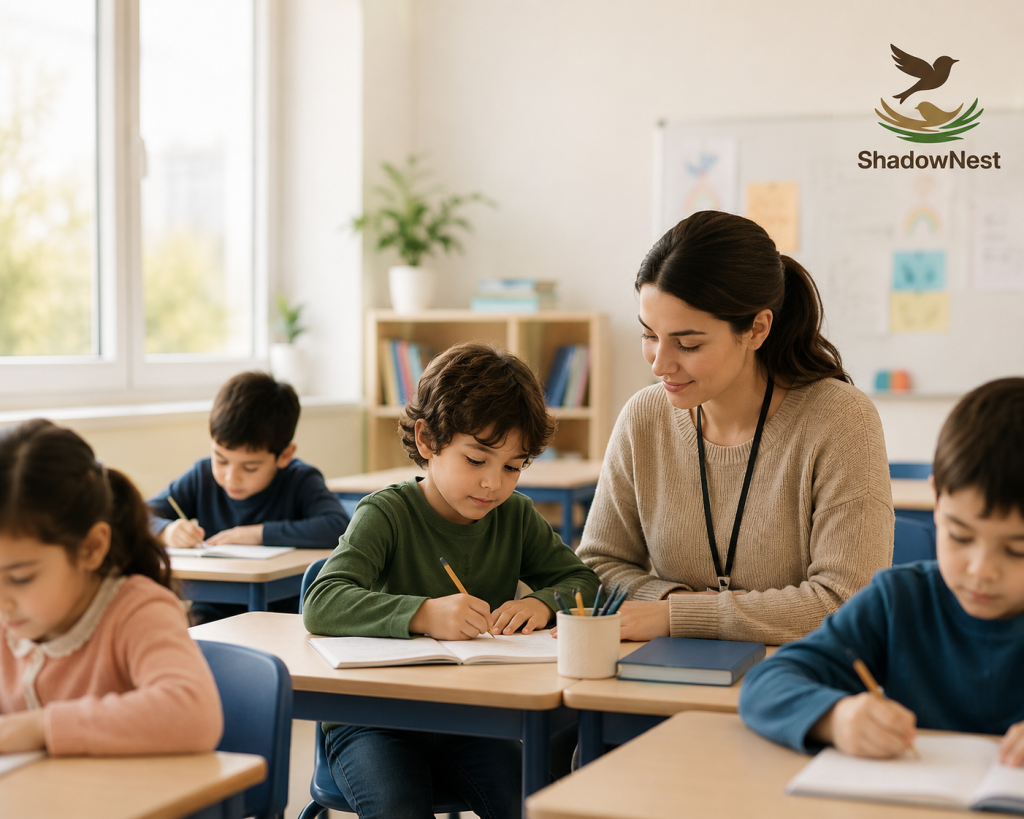
A shadow teacher is a trained professional who provides one-to-one support to a child within the classroom. Rather than replacing the classroom teacher, the shadow teacher works alongside school staff to help the child understand instructions, stay engaged, develop social skills, and become increasingly independent.
In Dubai and throughout the UAE, inclusive education has become an essential part of many schools. As more children with diverse learning needs attend mainstream classrooms, shadow teachers play an important role in helping them participate successfully while building confidence and independence.
If you have ever wondered, “Does my child need a shadow teacher?”, this guide will help you identify fifteen common signs that may indicate your child could benefit from individualized classroom support.
What Is a Shadow Teacher?
A shadow teacher is an educational support professional who works directly with one child during the school day. Their primary goal is to help the child succeed academically, socially, and emotionally while encouraging gradual independence.
A shadow teacher may assist with:
- Following classroom instructions
- Maintaining attention during lessons
- Improving communication
- Developing social skills
- Managing emotions
- Supporting positive behavior
- Increasing independence
- Building confidence in school
Importantly, a shadow teacher is not there to complete work for the child. Instead, they provide the right amount of support so the child can participate as independently as possible.
Who Can Benefit from a Shadow Teacher?
Although shadow teachers are commonly associated with children with Autism Spectrum Disorder (ASD), they can support many children with different educational needs.
A child may benefit from a shadow teacher if they have:
- Autism Spectrum Disorder (ASD)
- Attention-Deficit/Hyperactivity Disorder (ADHD)
- Speech and language disorders
- Learning disabilities
- Developmental delays
- Social communication difficulties
- Anxiety related to school
- Sensory processing challenges
- Emotional or behavioral difficulties
The decision should always be based on the child’s individual needs rather than a diagnosis alone.
15 Signs Your Child May Need a Shadow Teacher
1. Your Child Struggles to Stay Focused in Class
Children naturally become distracted from time to time. However, if your child consistently loses focus during lessons, misses important instructions, or struggles to complete classroom activities, additional support may be beneficial.
Some children become distracted by noises, classmates, or objects around them. Others begin assignments but are unable to finish without repeated reminders.
A shadow teacher gently redirects attention using positive reinforcement and individualized strategies, helping the child remain engaged without interrupting the learning environment.
2. Your Child Finds It Difficult to Follow Instructions
Many classroom activities involve multiple-step directions. While most children gradually learn to process these instructions independently, others become overwhelmed.
Your child may:
- Forget instructions quickly.
- Complete only part of a task.
- Frequently ask what to do next.
- Become confused during classroom routines.
A shadow teacher can simplify instructions, repeat important information when necessary, and use visual supports to improve understanding.
This approach reduces frustration while encouraging the child to become more independent over time.
3. Your Child Has Difficulty Making Friends
School is about much more than academics. Children also learn communication, teamwork, empathy, and problem-solving through daily interactions with classmates.
Some children struggle to:
- Start conversations.
- Join group activities.
- Share materials.
- Wait their turn.
- Understand social rules.
- Interpret facial expressions or body language.
When these challenges continue, children may feel isolated or excluded.
A shadow teacher provides natural coaching throughout the school day, helping children practice appropriate social interactions while building genuine friendships and confidence.
4. Your Child Becomes Easily Overwhelmed at School
Some children experience significant stress in busy classroom environments.
You may notice:
- Frequent crying before school.
- Emotional meltdowns.
- Anxiety during transitions.
- Refusal to participate in activities.
- Difficulty coping with changes in routine.
These behaviors often reflect underlying emotional or sensory challenges rather than intentional misbehavior.
A shadow teacher provides reassurance, teaches emotional regulation strategies, and helps the child navigate difficult situations calmly and successfully.
5. Teachers Frequently Report Behavioral Concerns
If teachers regularly mention behaviors such as:
- Leaving the seat without permission
- Interrupting lessons
- Difficulty waiting
- Impulsive actions
- Aggressive reactions
- Refusing classroom tasks
it may indicate that your child needs additional individualized support.
Behavior is often a form of communication. Children may act out because they cannot express their needs, understand expectations, or regulate emotions effectively.
Rather than focusing only on correcting behavior, a shadow teacher identifies the underlying causes, teaches positive alternatives, and supports the child in developing self-regulation skills that promote long-term success.
6. Your Child Has Difficulty Communicating with Teachers or Classmates
Communication is one of the most important skills a child develops at school. Children who struggle to express their thoughts or understand others may find classroom participation challenging.
Your child may:
- Have difficulty answering questions.
- Use limited vocabulary.
- Avoid speaking in class.
- Misunderstand instructions.
- Become frustrated when others do not understand them.
A shadow teacher encourages communication in everyday situations, helping the child participate in conversations, ask for help appropriately, and build confidence when interacting with teachers and classmates.
This type of support is especially beneficial for children with speech and language disorders, autism spectrum disorder, or social communication difficulties.
7. Your Child Is Falling Behind Academically
Every child learns at their own pace, but persistent academic struggles may indicate that additional classroom support is needed.
Signs include:
- Difficulty completing assignments.
- Falling behind classmates.
- Frequently forgetting newly learned information.
- Avoiding reading or writing tasks.
- Requiring constant assistance to complete schoolwork.
A shadow teacher does not replace the classroom teacher. Instead, they help the child understand instructions, organize tasks, maintain attention, and complete activities independently whenever possible.
With consistent support, many children experience improvements in both academic performance and self-confidence.
8. Your Child Finds Transitions Extremely Difficult
Changing from one activity to another can be challenging for some children.
Transitions may include:
- Moving between classrooms.
- Switching from playtime to lessons.
- Going to lunch.
- Returning home after school.
- Adjusting to unexpected schedule changes.
Children who struggle with transitions may become anxious, upset, or resistant whenever routines change.
A shadow teacher prepares the child by using visual schedules, verbal reminders, countdowns, and structured routines. These strategies reduce anxiety and help children become more flexible over time.
9. Your Child Depends on Adults for Every Task
One important goal of education is helping children become independent learners.
If your child waits for adults before starting every activity, asks for constant reassurance, or avoids making simple decisions independently, additional support may be beneficial.
Examples include:
- Waiting for instructions before every step.
- Needing help organizing school materials.
- Refusing independent work.
- Constantly seeking reassurance.
- Avoiding simple problem-solving.
A professional shadow teacher gradually reduces support instead of increasing dependence.
Children learn valuable life skills such as:
- Organization
- Self-management
- Decision-making
- Responsibility
- Problem-solving
- Confidence
The ultimate goal is to help the child function independently within the classroom.
10. Your Child Has Sensory Processing Difficulties
Some children experience the classroom environment differently from their peers.
Bright lights, loud sounds, crowded hallways, or certain textures may feel overwhelming.
Common signs include:
- Covering ears during noisy activities.
- Becoming distressed during assemblies.
- Avoiding crowded areas.
- Difficulty sitting still.
- Seeking constant movement.
- Becoming overwhelmed by classroom noise.
A shadow teacher recognizes sensory triggers and works closely with teachers and parents to create supportive strategies.
These may include:
- Scheduled movement breaks.
- Quiet work areas.
- Visual supports.
- Sensory regulation techniques.
- Gradual exposure to challenging situations.
When sensory needs are understood, children are often better able to concentrate, participate, and enjoy school.
Why Early Support Matters
Many parents delay seeking additional support because they hope their child will simply “grow out of” the challenges they are experiencing. While every child develops at their own pace, persistent difficulties with communication, attention, behavior, or social interaction should not be ignored.
Early intervention gives children the opportunity to develop important skills before small challenges become larger obstacles. Research consistently shows that children who receive appropriate educational support early are more likely to build confidence, improve academic performance, strengthen social relationships, and become increasingly independent.
If you have been asking yourself, “Does my child need a shadow teacher?”, remember that seeking guidance is not a sign of failure. It is a proactive step toward giving your child the best possible opportunity to succeed in school and beyond.
11. Your Child Struggles to Regulate Emotions
Children experience a wide range of emotions every day, but some find it especially difficult to manage frustration, disappointment, or unexpected changes. Emotional outbursts, frequent crying, or becoming overwhelmed by small challenges may interfere with learning and social development.
A shadow teacher helps children recognize their emotions and develop healthy coping strategies. Instead of reacting impulsively, children learn how to ask for help, take calming breaks, use self-regulation techniques, and respond appropriately to challenging situations.
As these skills improve, children often become more confident, resilient, and successful both inside and outside the classroom.
12. Your Child Avoids Group Activities
Learning is not only about individual achievement. Many important skills are developed through teamwork, classroom discussions, and cooperative learning.
Some children may:
- Prefer to stay alone.
- Avoid participating in group projects.
- Feel anxious when working with classmates.
- Have difficulty sharing materials.
- Watch others instead of joining activities.
A shadow teacher gently encourages participation without creating pressure. By modelling appropriate social interactions and providing reassurance, the child gradually becomes more comfortable engaging with classmates and building meaningful friendships.
13. Teachers Recommend Additional Classroom Support
Teachers observe children’s learning and behaviour every day. If your child’s teacher consistently recommends additional classroom support, it is important to consider their observations carefully.
Teachers may notice that your child:
- Requires frequent one-to-one assistance.
- Misses classroom instructions.
- Has difficulty staying engaged.
- Needs repeated prompts to complete tasks.
- Falls behind despite classroom accommodations.
A shadow teacher works collaboratively with teachers, therapists, and parents to create a consistent support system that helps the child succeed in school.
14. Your Child Is Adjusting to a New School
Changing schools can be stressful for any child. For children with communication, learning, or developmental challenges, adapting to a new environment may be even more difficult.
A shadow teacher can support this transition by helping the child:
- Learn classroom routines.
- Understand school expectations.
- Build relationships with teachers.
- Make new friends.
- Feel safe in unfamiliar surroundings.
For many children, this support is temporary until they become comfortable and independent in their new school environment.
15. Your Child Has a Developmental or Learning Difference
A diagnosis alone does not automatically mean a child needs a shadow teacher. However, children diagnosed with Autism Spectrum Disorder (ASD), ADHD, learning disabilities, speech and language disorders, developmental delays, or other educational needs may benefit from individualized classroom support.
The most important factor is not the diagnosis itself but how the child’s challenges affect daily learning, communication, independence, and participation at school.
If you are still asking yourself, “Does my child need a shadow teacher?”, a professional assessment together with feedback from teachers and parents can help determine the most appropriate level of support.
When a Child May Not Need a Shadow Teacher
Although shadow teachers provide valuable support, not every child requires one-to-one assistance.
A child may not need a shadow teacher if they:
- Participate successfully with existing classroom accommodations.
- Demonstrate age-appropriate independence.
- Show steady progress without individualized support.
- Only require occasional tutoring outside school.
- Have temporary challenges that improve naturally over time.
The objective should always be to provide the least restrictive support while encouraging maximum independence.
How to Choose the Right Shadow Teacher
Choosing the right professional can make a significant difference in your child’s educational experience.
Look for a shadow teacher who:
- Has experience supporting children with diverse learning needs.
- Communicates effectively with teachers and parents.
- Encourages independence rather than dependence.
- Uses evidence-based educational strategies.
- Demonstrates patience, empathy, and professionalism.
- Understands inclusive education practices.
The best shadow teacher empowers the child to become increasingly confident and independent rather than relying on constant assistance.
Frequently Asked Questions
Does my child need a shadow teacher if they have ADHD?
Some children with ADHD benefit from a shadow teacher, particularly if attention difficulties, impulsivity, or organization significantly affect classroom learning. The decision should always be based on the child’s individual needs rather than the diagnosis alone.
Does my child need a shadow teacher if they have autism?
Many children with Autism Spectrum Disorder benefit from individualized classroom support. However, the level of assistance depends on each child’s communication, social, behavioral, and academic needs.
Can a shadow teacher help children without autism?
Yes. Shadow teachers also support children with ADHD, speech and language disorders, developmental delays, learning disabilities, anxiety, sensory processing challenges, and social communication difficulties.
Will my child always need a shadow teacher?
No. The goal of a professional shadow teacher is to build independence. Many children gradually require less support as they develop the skills needed to succeed independently.
Does having a shadow teacher affect my child’s confidence?
When provided appropriately, individualized support often increases confidence because children experience greater success, improved participation, and stronger relationships with teachers and classmates.
Conclusion
If you have been wondering, “Does my child need a shadow teacher?”, the answer depends on your child’s unique strengths, challenges, and educational needs. Every child deserves the opportunity to learn in an environment where they feel supported, included, and confident.
Recognizing the signs early allows families to provide timely assistance before challenges begin to affect academic achievement, emotional well-being, or social development.
A shadow teacher is not there to replace the classroom teacher or complete work on behalf of the child. Instead, they provide individualized guidance that helps children develop the confidence, independence, and essential life skills needed to thrive both inside and outside the classroom.
With the right support, many children make remarkable progress and gradually become successful independent learners.
Why Choose ShadowNest?
At ShadowNest, we believe every child deserves the opportunity to reach their full potential.
We connect families across Dubai and the UAE with carefully selected, experienced, and compassionate shadow teachers who provide individualized classroom support based on each child’s unique needs.
Whether your child requires temporary assistance during a school transition or ongoing educational support, our team is committed to helping families find the right professional for long-term success.
Contact ShadowNest today to learn how our experienced shadow teachers can help your child build confidence, independence, and success in an inclusive learning environment.
How to Request the Best Shadow Teacher in Dubai
If you’re a parent or school administrator seeking expert support, ShadowNest makes the process simple.
👉 Click here to request a Shadow Teacher
Together, we’ll design a support system that works for your child’s unique needs.
Related Topics:
shadow teacher in Dubai school